Low-latency wireless video · OTA
Screen Casting
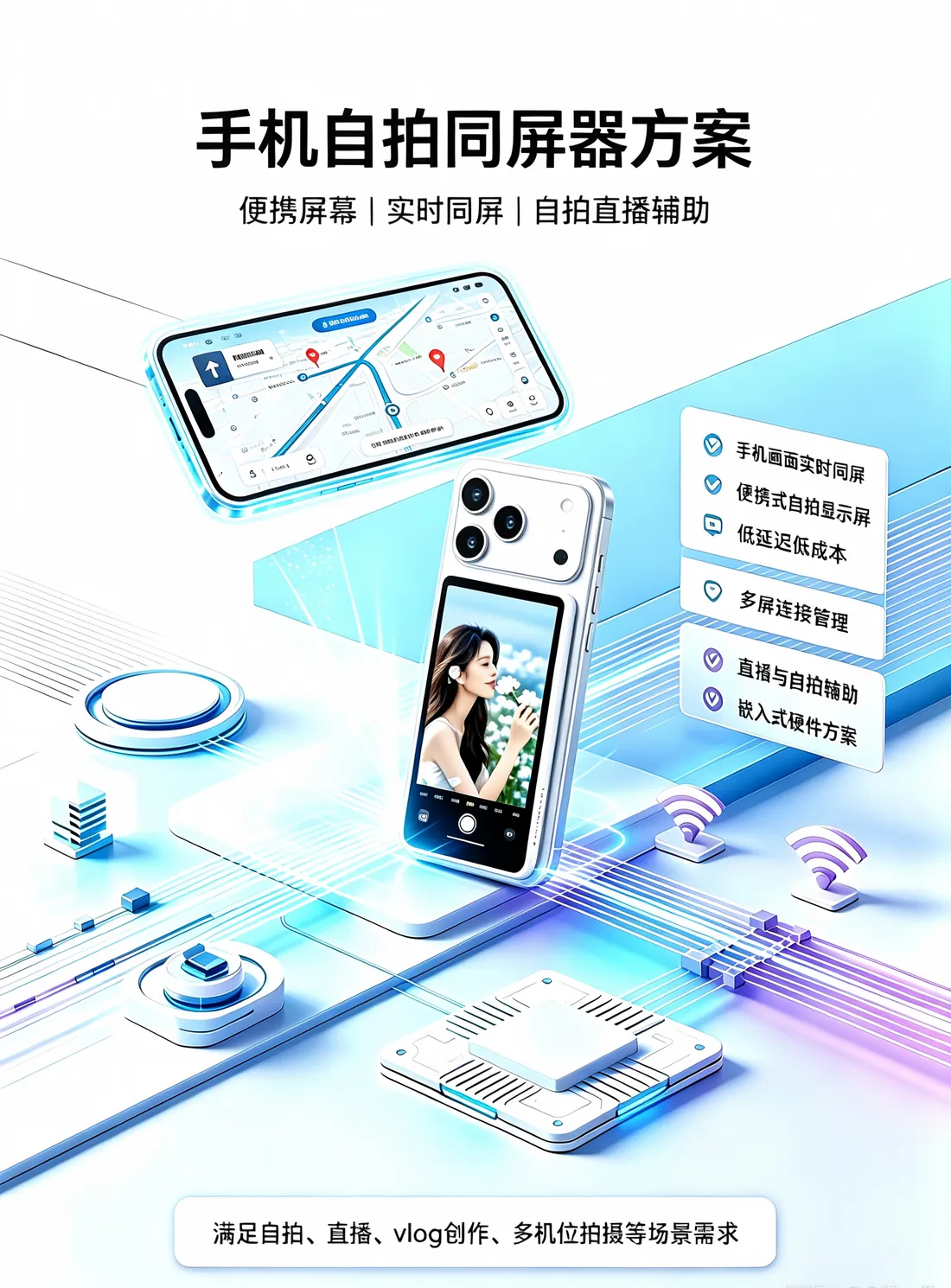
Portable casting hardware for selfies, live selling and vlogging — the phone screen mirrored in real time onto a display the presenter can actually see, at a latency and a cost that work in volume.
The part that decides the project
Holding latency on a radio you do not control.
A casting box has to keep a stable stream in a room full of competing WiFi, on whatever phone the customer owns, without the picture tearing when someone walks between them. That is RF design and the wireless stack — the enclosure and the app are the easy half.
OTA
OTA is in every connected design
Firmware ships with a dual-partition layout and automatic fallback, so an interrupted update boots the previous image instead of bricking the unit. Updates go out in staged batches from the device cloud, with version reporting per unit. It is designed in at the first prototype, not added before launch.
What you need to decide before we can quote
- Which phones and OS versions must work on day one
- Casting protocol — AirPlay, Miracast, or your own
- Latency target, and what you are willing to pay for it
What this direction covers
- Real-time phone screen mirroring
- Portable selfie displays
- Low-latency, low-cost designs
- Multi-device connection management
- Live streaming & selfie assist
- Embedded casting modules
Silicon it runs on
WiFi SoC · Linux SoC · A/V codec
CapabilitiesRequest a Quote
Start a screen casting project
Send the market, target price band and certifications. You get a platform recommendation, a cost envelope and the certification path — from an engineer, within one business day.